Your Questions, Answered
-
The word “Quinceañera” has dual meaning. Quinceañera is most recognized as the celebration of a girl's fifteenth birthday, but can also identify the girl who is fifteen.
-
In times long ago, fifteen was the legal age at which a young lady could be engaged or even married. There was a large community celebration, hosted by the parents and Padrinos, so that the community could witness the validity of marital vows, should the young lady decide to enter into Holy Matrimony.
-
The Quinceañera marks the time in a females journey when she is progressing from the stage of a little to that of a young woman, on her path to becoming an adult in womanhood. Young ladies look forward to maturing and being recognized for their maturity among family and her community.
-
The Quinceañera observes a young woman coming of age, with rights and responsibilities being entrusted to her. The Sweet 16, mainly celebrated in Anglo cultures, also observes a young woman, but is more concentrated around the Drivers License and freedom to drive.
-
Celebrations can vary. Quinceañera celebrations will be determined by cultural, familial, and religious influence. Some Religious families will focus on the blessing of a priest. Cultural families might emphasize traditional gifts, such as the Last Doll. Families may also give some freedom to the Quinceañera (girl) to be involved in some decision making around her celebration.
Planning usually involves a place to participate in the gifts from the Padrinos, blessing from the pastor or priest, and the reception; which typically includes a banquet of sorts, elegant attire, and a dance in her honor.
-
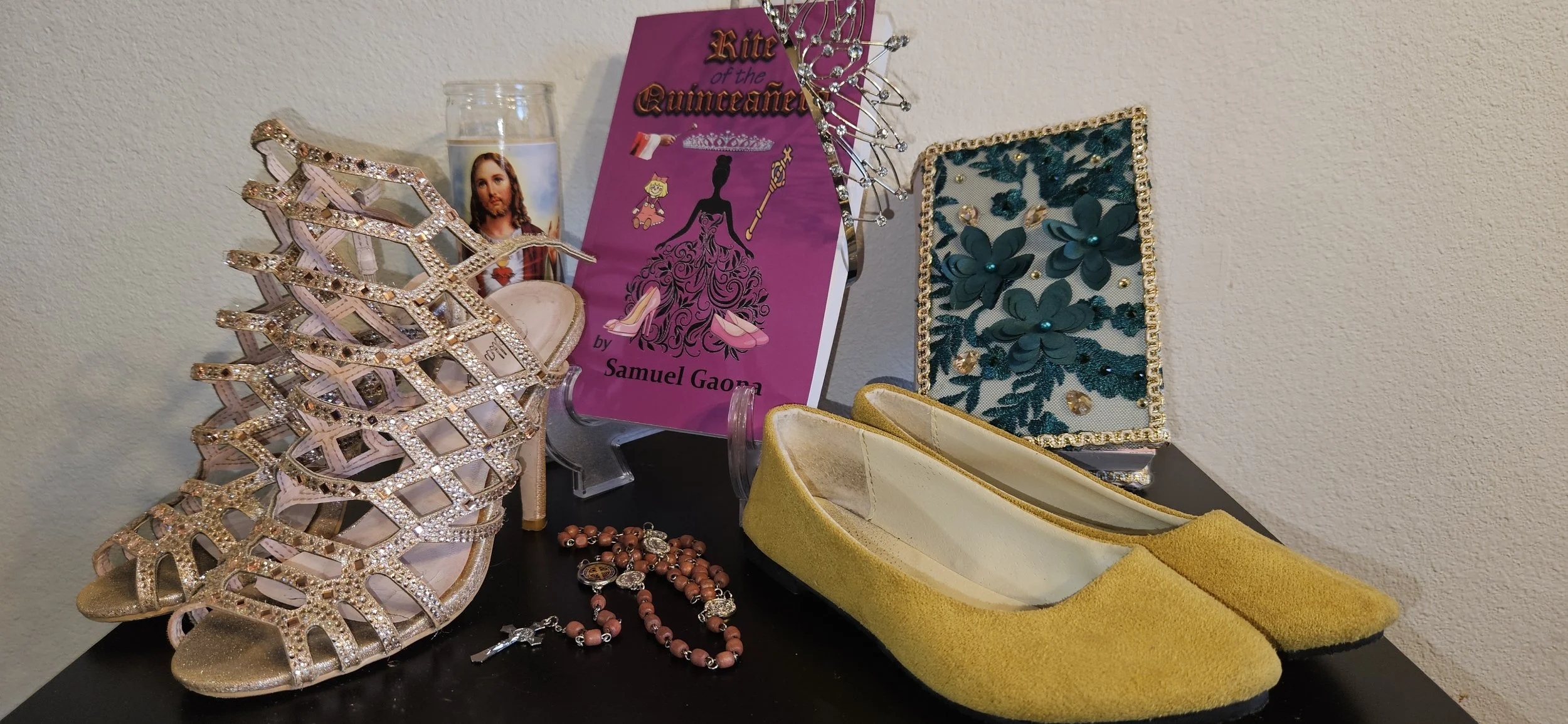
The tiara is probably the most recognizable tradition for the Quinceañera (girl) to wear. Flat shoes are exchanged for high heels as a sign of her maturity. If a dance is held in her honor, a Father/Daughter dance or a Court Waltz, if she has a Court, may occur during the reception.
-
Parents should plan to give themselves a place of honor. Sponsors and Godparents, Padrinos, should also be honored.
Some Quinceañera’s will invite a Royal Court. Which a “Full Court” includes 6 girls (damas), 7 boys (chambelanes), and a flower girl. 6 pairs of boys and girls, with the seventh boy being the Main Chambelan. With fourteen in her Court, the Quinceañera girl is the fifteenth person at her fifteenth birthday.
-
No, it is not required to have every tradition observed. Some traditions may be opted out. Common items that might not be observed include a Limo ride around town or the scepter.
-
Absolutely! The Quinceañera is typically in close proximity with High School. Most young ladies will turn fifteen during Freshman year, a few may turn fifteen before Freshman year begins.
High School is an important time when her character is being revealed as well as being formed. Community support and religious blessing build encouragement as the young lady enters this new stage in her life journey.
-
Some families might begin planning when she becomes a teenager, 13, to map out finances and begin seeking support from family as well as community. For families viewing the Quinceañera as a rite of passage, they might begin planning even earlier.
It’s most common to have a place or places, Church and Hall, one year prior, so there is time to fill the celebration with everybody (Padrinos, Court, guests) and everything (gift’s and tradition’s). One year prior is also common practice, because multiple venues require a reservation ahead of events, and early booking helps the celebration be as close to her actual birthday or even schedule on her birthday.
-
“Rite of the Quinceañera” is a journey into the cultural and religious significance of the Quinceañera celebrations. Preparation in faith and morals, to equip the young woman of faith to exercise her decision making authority well. That she may strive socially, while maintaining her familial and religious values.
-
After writing curriculum for a local parish and receiving much praise for the message and formation, a desire grew for in class lessons to be free of needing a time and place. I sought to publish for the convenience of the families.
During the research process, I learned that there are hundreds of Guestbooks, How To guides, party planners, historical books and only a handful of religious books revolving around the Quinceañera. There were no books that addressed both cultural and religious aspects to balance the preparation of young ladies, families, and communities. I considered that there may be other parents out there, seeking what I was looking for and not finding.
-
As early as thirteen, this book has been understood and appreciated after reading. Because it is not a story to be told, it isn’t sought by young adults. Parents, Grandparents and Godparents mainly purchase as a gift to young ladies ahead of their Quinceañera.
Parents, Grandparents and Godparents have also had interest, even communicating that they “wish they had something like this when they were a teen.” Some have relearned some things they forgot, while others learned some things they were just never taught.
Religious leaders, who struggle with meeting youth between Christian Faith and cultural traditions, can find this book helpful to guide the young ladies desiring a Christian celebration. This may also be a Religious Education resource to recommend ahead of the planning and celebration.
-
Yes, chapter 12 of this book covers the traditions and traditional gifts involved in a Quinceañera. Some have only cultural significance and are explained. Some have only religious significance and are explained. Some traditions and gifts have both cultural and religious significance and are explained thoroughly; addressing cultural and religious significance.
-
Yes, chapter 13 goes over the Mass and includes the placement of the Rite of the Quinceañera within the Quinceañera Mass.
Baptismal Promises renewal, prayer of consecration, blessing of the Quinceañera, and blessing of the gifts presented are all addressed.
More Questions, Answered
Common Quetions I get about the Quinceañera - Where did the Quinceañera come from and is the Quinceañera still relevant today?